Monday, February 28, 2022

WHY CHOOSE AN ALL ELECTRIC HOME


There are a number of choices available to you when it comes to how you heat and cool your home. While many people choose electric means of cooling, heating is often a different story. The heating options for your home include things like gas heat, wood-burning heating, and even ambient heating solutions that use steam or hot water to pump heat through pipes in concrete flooring. Some homes even use a combination of these methods to heat different rooms in the house.

If you’re considering how you want to heat and cool your own home, however, there is something to be said for using an all-electric solution. While electric heat and air might not be right for every home or every homeowner, it’s at least worth considering if you’re in the market for a new home or are planning out a new construction project. If you’ve never really given an all-electric home much consideration, here are a few things that you should think about.

Rising Home Heating Costs

It seems like every year, the cost of heating your home is going up. There are many reasons for this, not the least of which is fluctuations in the cost of heating fuels such as propane and natural gas. Depending on where you live, using these fuels as a heat source can be pretty expensive over the course of increasingly harsh winters when you’re going to have to run the heat a lot. Supply issues can also make it difficult to get refills of fuels like propane when you need them, and if you are able to secure a refill for your tank, then the increased demand could drive prices even higher.

While the cost of electricity also sees periodic increases, electric power isn’t as prone to wild fluctuations as some other fuels are. This can create more price stability over the course of a season, even in the event of severe winter weather that might drive up demand and pricing for some other fuels. Given that your home is already wired for electricity, it also offers the convenience of giving you a single bill for your heating and cooling needs without the requirement of scheduling refills or making other provisions to secure fuel.

Harnessing Solar Energy

Another big potential advantage of going all-electric is that you can use solar energy as a means to offset or even eliminate your heating and cooling costs. By installing solar panels on your roof or near your home, you can offset your use of grid power, or even charge batteries that your home will draw some or all its power from. Depending on the size of your solar setup, this can result in a significant decrease in the amount that you pay to heat and cool your home (and run everything else, too) throughout the year.

The savings from going solar can extend beyond just your heating and cooling costs, too. Installing solar panels at your house may qualify you for certain tax breaks or other benefits, saving you money when it comes time to pay your taxes as well. If you have a large enough solar setup, you may even be able to produce more power than your home uses. Depending on where you live, this could give you an opportunity to sell some power back to the grid, actually making money off of your home’s power setup.

Choosing an All-Electric Home

There are several ways that you can go all-electric, from buying a house that already has an all-electric setup to have a new electric unit installed to replace previous heating and cooling equipment. If you’ve already got an all-electric setup, you can also look at options such as solar to reduce your costs even more. 

If you are in the market to buy or sell rural property, give the Rural KC Team a call.  We would love to help you.  913-837-0760 or 913-837-0411.

Tuesday, February 22, 2022

BUYERS: HOW TO PUT YOUR BEST FOOT FORWARD


Housing prices continue to climb, inventories continue to remain low, demand for housing is intense, and there’s absolutely no relief in sight. It’s a hard time to be a homebuyer right now! Despite that, you can still find a house that you’ll love; it may just take a little extra polish and shine as you head into your home buying adventure. Cash is still king, but you can be more competitive by putting your best foot forward with your offers.

Here are our best tips for buyers trying to secure a home in this busy and tight market.

Bring a Pre-Approval Letter From Your Lender

It’s one thing to think you’ll be approved for a loan, and yet another to know it. In today’s competitive market, your seller doesn’t want to wonder; they want to be certain that the contract they sign is one that will be able to close. This is doubly a concern for sellers who are faced with multiple offers in a short period since sometimes they all look pretty good on the surface.

Going to your bank and making it as far as your loan approval process can go without a house gives a seller confidence that they won’t be back in the same place in a month, trying to sell a house that already had a contract fall through on it. For them, that might mean delaying their own purchase or even having to sell their home at a discount, since buyers are sometimes nervous when previous contracts didn’t close.

Go Conventional!

Although many buyers can get into a home faster with an FHA loan, especially with the sometimes lower down payment requirements, sellers know that FHA and other loan programs carry additional requirements for the house itself, too. Although these are usually items most houses will already have if someone is living in them (for example, heat in every room), sellers have often heard horror stories and simply don’t want to deal with the unknown.

Rather than using an FHA program, work on your credit and choose a conventional loan. Conventional loans have far fewer requirements on the property itself, making them an easy transaction for your home seller. There’s nothing wrong with using an FHA loan if you have the time and patience to house hunt using one, but nothing says “easy peasy” to a seller like a conventional loan.

Bring Your Best Offer

Your best offer is the highest amount you’re willing to pay for the property in question, not an ideal price that you’d like to pay. In a different market, where buyers get their picks of the litter, you can feel out a seller to see where the bottom is, but in a market like what we’re still facing in most of the country, you’re far more likely to be competing with several offers at once, so the seller will probably either accept or reject yours rather than try to negotiate.

In addition to bringing your best offer, keep your list of requests short. You can (and should) absolutely ask for repairs to major items you noted when you viewed the home, but now is not the time to sweat the little things. The longer that list is now


before you’ve even had your inspection, the less likely it is that the seller will want to work with you.

Go Forth Boldly Into Your Offer

Putting in an offer on a home in this breakneck speed real estate market can be extremely intimidating, but you never have to face the unknown alone. When it comes time to move into your new home, you’ve got an entire network of friends and partners to help you patch up, paint up, clean up, and even move in!

Remember to give Rural KC Team a call with any questions you might have, or if you are interested in buying or selling rural property.  913-837-0760 or 913-837-0411.  We also have a great network of lenders. 


Monday, February 7, 2022

5 THINGS YOU CAN DO TO IMPROVE THE VALUE OF YOUR LAND

Investing in land has been shown to be a smart and lucrative way to diversify and grow your portfolio. However, just like with a traditional home, there are improvements you can make to help increase its value and curb appeal. Learn 5 simple things you can do to enhance your rural property and protect your investment.

As homeowners, most of us make it a point to become familiar with home improvement projects that offer the best return on investment. Kitchens and bathroom upgrades, for example, will increase the value of your home more than installing high-end landscaping or re-doing your garage interior.

However, when it comes to improving the value of raw, undeveloped land things aren’t so cut and dry. The reason is: different types of land serve different purposes such as hunting, farming, or recreation. Thus, there’s not a one-size-fits-all in terms of ROI on raw land improvements.

As stated by Zac Ryan of Ryan Appraisal Services: “When the improvement enhances the true use potential — and the buyer’s understanding of the use potential — of a property, that increases its value.”

That said, there are some tried and true land improvement projects that can help enhance the value of most types of raw rural land. Here are 5 ideas to help you get started:

#1: Improve Access

Access Issues can make even the most idyllic property look like a lemon to potential buyers. Although not all access problems are fixable, things like a lack of road access could be remedied by talking to your neighbor about an easement and road maintenance agreement.

If you already have road front access, do you have a functional driveway in place? If not, the most affordable and environmentally-friendly option is installing a gravel driveway, or opt for asphalt or concrete. And if you do have a driveway, in place, make sure it’s well maintained.

#2: Work on Esthetics

Unlike suburban homes, rural properties aren’t meant to look perfectly manicured or professionally landscaped. However, your property should look cared for and “picked up”. Some basic esthetic upgrades include: removing dead or diseased trees, clearing out brush and overgrowth, pruning trees, clearing out any trash, dealing with eye sores like unused oil tanks, broken down vehicles/equipment, addressing issues with ponds or water features, mending and/or painting fences, fertilizing fields and/or addressing soil health issues to improve pasture appearance, removing any hazards like chemicals or old pesticides, fixing up or rebuilding old hunting stands, and fixing up buildings in disrepair like barns, greenhouses with torn plastic or broken panes, and old worn out sheds.

#3: Plant or Clear Trees

Depending on your property, the addition of native or ornamental trees and hedges can add a sense of privacy and beauty to your land. On the flip slide, the clearing of trees can also be beneficial if it improves the land’s functionality and/or showcases an otherwise hidden spectacular view (just make sure and call in the pros for large land-clearing jobs).

#4: Add Relevant and Functional Amenities

Depending on your budget, the addition of certain amenities can really enhance your property’s appeal and value.

For example, installing a pond has broad appeal for those interested in attracting wildlife, starting a farm, living off-grid, hunting, and fishing, or just enhancing the view.

Likewise, the addition of a rustic cabin or other shelter is attractive to recreational land buyers, those looking for a weekend home, or even buyers wishing to build a more permanent home who need a temporary place to live during the building process.

Other amenities to consider based on your budget include: adding trails, building a campsite, putting in garden beds or food plots, building hunting stands, installing fencing or a gate at the front of the driveway, running utilities to the property, drilling a well, installing footbridges over creeks and streams, and building a barn, pole barn, shed, or other outbuildings for storage.

#5: Address Drainage Issues

Most properties have some areas that could benefit from better drainage. You can address this in several ways, from installing underground drainage lines to grading or planting a bog, water garden, or water-loving trees (like willows or elderberry).

When considering land improvements to increase the value of raw land, always ask yourself: will this enhance the true use potential of my property? If you’re unsure, become more familiar with comparable properties for sale in your area and/or talk to an experienced land agent to get their advice on what property features have consistently attracted buyers.

Whether you’re planning to sell in the near future, or just want to take steps to grow and protect your investment, keeping this question at the forefront will help guide you to make the best upgrades and improvements to your unique property.

As always, feel free to contact The Rural KC Team for any questions you might have, or if you are interested in buying or selling rural land.  Our numbers are 913-837-0760 or 913-837-0411.  Our website is ruralkc.com.  If you have some time, go on over to our podcast.  There are lots of interesting podcasts centered around living rural life.  https://ruralkc.libsyn.com/    Have a great day!

Monday, January 31, 2022

ARE YOU READY TO MAKE A MOVE?


Wondering why people are moving out of California? There are many reasons for this development, which include high cost of living, crisis, crime rate, high state taxes, and much more. We highlighted them in the post, plus the top places they are moving to.


California houses a lot of iconic sites, great scenery, luxurious infrastructure, dreamy beaches, and unique employment opportunities. In addition, its economy ranks 5th in the world. But the question is, why then are lots of people moving out of California?

A recent study by UC Berkeley revealed that over half of the residents of California are looking into moving.

The state’s population has been reducing because of national migration from 2000; however, natural population increase and international migration have kept California’s population growing at a 0.35% rate as of 2016.

Below are our best estimations of what a California resident could consider when planning a move, and where the calculation might land them.

Almost 700,000 people relocate out of California just last year. There are different reasons for even permanent residents of California to leave the state and move out of it.

Below are the major ones:

1. High Cost of Living


California is an expensive place to live. The cost-demanding moving candidates start from people with financial issues to those on a constant income, such as retirees and a new group formed in the pandemic time – an employee who can work remotely.

Consider what an interstate ‘price parity’ cost of living index of California from the Federal Bureau of Economic Analysis reveals to us about affordable moving possibilities, it shows the state is expensive to live in.

2. Rising State Taxes


The marginal income tax rate is currently at 13.3% but legislators want to increase it to almost 17%. The move would not just affect rich residents of California but also small entrepreneurs, most of whom are facing challenges related to COVID-19 lockdowns and shutdowns. The sales tax is more than 7% already and there is a $0.50 gas tax.

Furthermore, residents of California are not even allowed to deduct most of their state taxes from their federal taxes all thanks to the Tax Cuts and Jobs Act by President Trump. Even though taxes in other states are high, California is one of the two states with a tax rate of more than 10% (the other is Hawaii). What that means in real life is highlighted below:

Simply put, someone who makes $50,000 per annum would be paying $9,679 in state and federal taxes. Someone who makes $100,000 per year would have to spend $28,923. Those that make $500,000 per annum would be paying a huge $210,949.

To complicate the matter, state legislators in California are now discussing retroactive taxes as well as an exit tax for rich residents of the state who leave California for another state. AB2088 doesn’t only seek to create a wealth tax in California but also force rich old California residents to pay the tax for nearly 10 years after they’ve left.

3. Political Problems


A lot of residents of California are in support of the policies of their state. However, a lot of conservative and even reasonable voters feel that California is moving too far to the left. Ben Shapiro, a conservative journalist talked about his personal decision to move out of state, stating increasing union influence, limitation on law enforcement officials, looting, and the stop to standardized testing in state universities as some of the factors that aid his decision to relocate to another state.

Others mentioned that they feel that their votes in California don’t count while others still complain that politicians focus on the needs of large cities while leaving the needs and wishes of residents of rural areas unattended. COVID-19 restrictions in the state have placed an extra strain on residents. 19 percent of California workers had filed for unemployment as of April 2020.

Even though some industries have resumed operation, others are affected by continued restrictions. Restricted businesses include gyms, restaurants, personal care services, bars, hospitality, and the tourism industry. Other states don’t have so many COVID-19-related lockdowns as California does, which causes many business owners to seriously look into leaving the state to another one where they have hope of attaining success in their business.

4. Unemployment


Not everyone considering a move is just being cost-conscious. Job opportunity and wage levels are huge factors for others who know that highly affordable states usually come with lesser incomes. To calculate opportunities, We considered the annual average wages from the second quarter of 2020, making a national pay scale.

The maximum national average wages were seen in Massachusetts at $81,640, then $79,040 in New York. California ranked 3rd at $76,336 and is an important reason many people stay. On the fourth position was Washington at $74,048, Connecticut at $73,164, and New Jersey at $71,552. Many factors affect the value of those incomes.

Begin with being able to keep a job. Consider the average unemployment rates from 2015 to 2019 and you find North Dakota as the state in which you don’t have many risks of losing a job with a median 2.7% unemployment rate. Hawaii was next and New Hampshire at 2.8%, Nebraska and Vermont were at 3%, followed by Iowa and South Dakota at 3.1%.

5. Housing Crisis


The average cost of real estate in California is a huge $600,000. And the latest data from Zillow shows that the median rent in California in mid-2020 is at $2,800 over the national average of $1,600. Simply put, if you are not wealthy or ready to live with friends or relatives, you truly cannot afford to reside in the state. California’s local jurisdiction holds huge sway on what is built.

Officials have usually weighed into NIMBY (not in my backyard) pressure against new construction, many of it in a bid to protect the ecosystem, or preserve neighborhood character. There are many reasons California had long-term housing storage: long-term homeowners possess local city councils, which encourages them to disallow the building of new housing projects in the name of saving the neighborhood character or protecting the ecology.

Old zoning laws ensure that cities can build dense urban locations; in fact, three-quarters of the entire residential land found in Los Angeles can only be used for constructing single-family homes. A lot of California residents tried to navigate around these challenges by building homes outside the city; unfortunately, these homes are usually built in areas that got devastated by fires recently. We'll discuss more on wildfires later.

6. Insecurity


Violent crime is increasing and a lot of people feel the COVID-19 restrictions are responsible for the problem. Even though some people think that California is cutting police budgets as rioters run everywhere unchecked, others complain about the difficulty people face in taking matters into their hands at the start of an attempted robbery because of the state laws. Former residents also fault prosecutors, accusing them of allowing criminals to run free. This reason is a major player in the speeding of people leaving California as people are looking for security and stability, including cheaper housing in other states.

7. The Convenience of Working from Home


Remote workers don’t necessarily have to reside in California to work for a California-based employer, and a lot of them are choosing another city with an affordable cost of living. A recent survey discovered around 43% of California residents who can work from any location is considering packing their belongings and searching for greener pastures.

Even the decline in housing prices of recent is not enough to convince the state residents from leaving the state to another state with a lower tax rate.

8. Social and Economic Challenges


California has over 150,000 homeless people, no other state has up to that, and many of them are either mentally ill or addicted to drugs. They expose themselves in places where they are noticeable by children and many other challenges reported by residents. Former residents mentioned that homeless individuals can be seen everywhere in the state, even in areas where wealthy people live.

Others complain that there has been increasing in homeless encampments in suburban locations all over the state. The majority of former residents of the state feel that the Californian government is either not doing its best in solving the problem or is just compounding the problem.

9. Devastating Wildfires


More than 8500 fires burned almost 2 million hectares of land in California as of October 2020. This makes last year the biggest son in the history of the state. Former residents of California made their frustration known on the issue of fires that are not likely to turn less dangerous in the coming future. Others mentioned that they will move out of their home burns down one more time as they just can’t handle the cycle of unending rebuilding and destruction.

Also, the fires don’t just affect those that live in rural areas; the largest cities in California were covered in thick smoke as the fires raged, compelling residents of the urban area to remain indoors until the fires go down.

Top 5 Locations Californians are Relocating to in the United States


Former residents of California can be seen all over the country. Even so, there are states that seem to be more famous than others. If you are looking for where to call your next home, choosing where to relocate to from California can be hard.

Below are the five common states Californians choose to call home.
1. Texas

One of the major reasons most Californians are moving to Texas is the absence of state income tax. When you save more of your income in your pocket, why won’t you love it? Texas has also been ranked the 12th best state economy by Wallet Hub based on GDP growth. The average house price in and around main cities is below $300,000, which makes it cheap to own your own home. And with many sports teams, culture, food, and entertainment, there is a lot to do and see.

2. Arizona:

Firstly, this state has the Grand Canyon. There is a lot to explore from the deserts to the mountains. The weather in this state is so nice. 300 days in a year are sunny in Arizona. Also, the cost of living is low with an average house price of $350,000. Arizona has adapted to the 21st-cent technology with tech giants like Apple and Uber stretching into the state and making increased growth for employment opportunities.

3. Washington

The first reason for relocating to Washington is employment. Bigger companies like Microsoft, Starbucks, Amazon, and Boeing call this state home. Washington is referred to as a green state because you will find water and greenery all around. It is home to a lot of other outdoor events with three National Parks, hiking in the 14,410-ft Mr. Rainier, and skiing during winter. Washington is one of the states that have no state income tax, which enables you to save even more of your income.

4. Nevada

This state also doesn’t charge state income tax. In addition, you save on medicine and food since there is no state sales tax on these items. Entertainment in Nevada is big with Las Vegas and Reno as the two of the major cities. However, there is unlimited scenery, with Mt. Charleston just about one hour away from Vegas as well as Red Rock Canyons for those that love to climb rocks. There is also legal gambling in Nevada, which makes it a place for people that love to roll dice.

5. Oregon

If you love adventure so much, Oregon is your ideal destination. With more than 300 miles of coastline to navigate, lakes, streams, dunes, rivers, and mountains, you have unlimited possibilities. Oregon is also where Crater Lake National Park is located. There is no state sales tax in Oregon as well, and you don't even have to pump your gas.

In conclusion, if you are currently living in California and are contemplating moving to the Kansas City area, please don't hesitate to give the Rural KC Team a call. We would love to help you make your move as smooth and hassle-free as possible. Give us a call at 913-837-0760 or 913-837-0411 or go to our website and check out all of the great homes in our area. www.ruralkc.com. Have a great day!


Many thanks to Dani James with Moving Apt for this great article.

Tuesday, January 25, 2022

WHY INFLATION SHOULDN'T STOP YOU FROM BUYING A HOME IN 2022


If you’re following along with the news today, you’re probably hearing a lot about record-breaking home prices, rising consumer costs, supply chain constraints, and more. And if you’re thinking about purchasing a home this year, all of these inflationary concerns are likely making you wonder if you should wait to buy. Investopedia explains that during a period of high inflation, prices rise across the board. And while home prices aren’t immune from this increase, here’s why inflation shouldn’t stop you from buying a home in 2022.

Homeownership Offers Stability and Security

Home prices have been increasing for quite some time, and experts say they’re going to continue to climb throughout 2022. So, as a buyer, how can you protect yourself from rising costs for things like food, shelter, entertainment, and other goods and services? The answer lies in housing.

Buying a home allows you to lock in your monthly mortgage payment for the foreseeable future. That means as other prices rise, your monthly payment will be consistent thanks to your fixed-rate mortgage. This gives you the peace of mind that the bulk of your housing costs is shielded from inflation.

James Royal, Senior Wealth Management Reporter at Bankrate, says:

"A fixed-rate mortgage allows you to maintain the biggest portion of housing expenses at the same payment. Sure, property taxes will rise and other expenses may creep up, but your monthly housing payment remains the same."

If you rent, you don’t have that same benefit and you won’t be protected from rising housing costs. As an added incentive to buy, consider that today’s mortgage interest rates are lower than they have been in decades. While inflation decreases what your dollars can buy, low mortgage rates help counteract it by boosting your purchasing power so you can get more home for your money. They also help keep your monthly payments down. This is especially important during an inflationary period because you’ll want to protect yourself from the impact of inflation as much as possible.

Ali Wolf, Chief Economist at Zonda, explains:

"If you have cash and are expecting inflation, you want to think through where you can put your money so it does not lose value.  Housing is commonly looked at as a good inflation hedge, especially with interest rates so low."

Bottom Line

The best hedge against inflation is a fixed housing cost. That’s why you shouldn’t let it stop you from buying a home this year. Not sure where to start? Connect with the Rural KC Team so you have expert advice and help throughout every step of the rural homebuying process.

Give us a call at 913-837-0760 or 913-837-0411.  We can help.  You can also go to our website: www.ruralkc.com.  If you have some listening time, go to our podcast site at:  https://ruralkc.libsyn.com/ or visit our Facebook page at: Rural KC Real Estate-Powered by Keller Williams Partners, Inc.  We look forward to serving you.

Thursday, January 20, 2022

THERE WON'T BE A WAIVE OF FORECLOSURES


When mortgage forbearance plans were first announced and the pandemic surged through the country in early 2020, many homeowners were allowed to pause their mortgage payments. Some analysts were concerned that once the forbearance program ended, the housing market would experience a wave of foreclosures like what happened after the housing bubble 15 years ago.

Here’s a look at why that isn’t the case.

1. There Are Fewer Homeowners in Trouble This Time

After the last housing crash, over nine million households lost their homes to a foreclosure, short sale, or because they gave it back to the bank. Many believed millions of homeowners would face the same fate again this time.

However, today’s data shows that most homeowners exited their forbearance plan either fully caught up on payments or with a plan from the bank that restructured their loan in a way that allowed them to start making payments again. The latest data from the Mortgage Bankers Association (MBA) studies how people exited the forbearance program from June 2020 to November 2021.

Here are those findings:

38.6% left the program paid in full

  • 19.9% made their monthly payments during the forbearance period
  • 11.8% made up all past-due payments
  • 6.9% paid off the loan in full

44% negotiated work-out repayment plans

  • 29.1% received a loan deferral
  • 14.1% received a loan modification
  • 0.8% arranged a different repayment plan

0.6% sold as a short sale or did a deed-in-lieu

16.8% left the program still in trouble and without a loss mitigation plan in place

2. Those Left in the Program Can Still Negotiate a Repayment Plan

As of last Friday, the total number of mortgages still in forbearance stood at 890,000. Those who remain in forbearance still have the chance to work out a suitable plan with the servicing company that represents their lender. And the servicing companies are under pressure to do just that by both federal and state agencies.

Rick Sharga, Executive Vice President at RealtyTrac, says in a recent tweet:

“The [Consumer Financial Protection Bureau] and state [Attorneys General] look like they’re adopting a ‘zero tolerance’ approach to mortgage servicing enforcement. Likely that this will limit #foreclosure activity for a good part of 2022, while servicers explore all possible loss [mitigation] options.”

For more information, read the warning issued by the Attorney General of New York State.

3. Most Homeowners Have More Than Enough Equity To Sell Their Homes

For those who can’t negotiate a solution and the 16.8% who left the forbearance program without a work-out, many will have enough equity to sell their homes and leave the closing with cash instead of facing foreclosures.

Due to rapidly rising home prices over the last two years, the average homeowner has gained record amounts of equity in their home. As Frank Martell, President & CEO of CoreLogic, explains:

“Not only have equity gains helped homeowners more seamlessly transition out of forbearance and avoid a distressed sale, but they’ve also enabled many to continue building their wealth.”


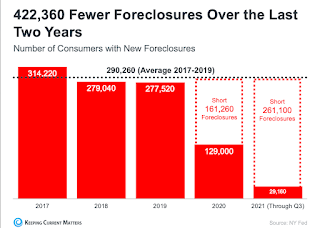
4. There Have Been Far Fewer Foreclosures Over the Last Two Years

One of the seldom-reported benefits of the forbearance program was that it allowed households experiencing financial difficulties prior to the pandemic to enter the program. It gave those homeowners an extra two years to get their finances in order and work out a plan with their lender. That prevented over 400,000 foreclosures that normally would have come to the market had the new forbearance program not been available. Otherwise, the real estate market would have had to absorb those foreclosures. Here’s a graph depicting this data:


5. The Current Market Can Easily Absorb Over a Million New Listings

When foreclosures hit the market in 2008, they added to the oversupply of houses that were already for sale. That resulted in over a nine-month supply of listings, and anything over a six-month supply can cause prices to depreciate.

It’s exactly the opposite today. The latest Existing Home Sales Report from the National Association of Realtors (NAR) reveals:

“Total housing inventory at the end of November amounted to 1.11 million units, down 9.8% from October and down 13.3% from one year ago (1.28 million). Unsold inventory sits at a 2.1-month supply at the current sales pace, a decline from both the prior month and from one year ago.”

A balanced market would have approximately a six-month supply of inventory. At 2.1 months, the market is severely understocked. Even if one million homes enter the market, there still won’t be enough inventory to meet the current demand.

Bottom Line

The end of the forbearance plan will not cause any upheaval in the housing market. Sharga puts it best:

“The fact that foreclosure starts declined despite hundreds of thousands of borrowers exiting the CARES Act mortgage forbearance program over the last few months is very encouraging. It suggests that the ‘forbearance equals foreclosure’ narrative was incorrect. . . .”

If you are looking to buy or sell rural property, please feel free to contact the Rural KC Team.  Rural property is all we handle.  913-837-0760 or 913-837-0411.   


Tuesday, January 18, 2022

CURB APPEAL FOR YOUR COUNTRY HOME


Everyone knows that curb appeal is very important if you are trying to sell your property.  There are numerous articles on the internet that will give you tips and pointers for curb appeal pertaining to city homes.  However, it is very hard to find tips on curb appeal for the country or rural property.  But no worries, the Rural KC Team is here to help.  

Make Your Porch Stand Out

One way to increase your curb appeal is to find ways to make your porch stand out and really draw the attention of visitors. There are several ways to accomplish this, with one of the most basic being a good use of color.  Now, I've noticed that a few of the rural property owners around here have accomplished this by putting a sofa or easy chair on their porch.  The furniture is usually put there until they can get enough pieces for an epic bon fire next Saturday night, but ole' Jake, the three-legged dog-he only has three legs because he got hung up in your coyote trap-has decided that that easy chair suits him just fine.  Add some red to your front door, either by painting the entire door or by adding red trim or decorations, as red really draws the eyes and puts a visitor’s focus on the entry to your home.  Word of warning here; the deer blood that came off your hands and coveralls when you tried to open the front door after processing your kill does not count.  Tasteful, colorful statues or other decorations on the porch will also help to draw the eyes and make your home stand out from the rest as well.  A "go to" for country homes are windchimes.  Bonus points if you use more that one make of beer cans (Natti Light, Coors, Bud Light, you get the picture) Adding a colorful wreath during the holiday season is always a winner.  My Aunt Doris had the best Christmas wreath that was made from snapping turtle shells painted green and red.  This decorative piece certainly made a big impact, and the turtle stew was pretty good too!

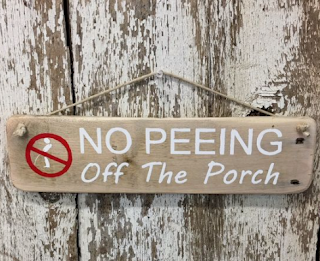
Replacing your old worn house number (or adding a house number if you previously didn’t have one on your home itself) can also make a big impact. However, in the country,  RR#2, Box #87 is just too much for your front porch.  So we suggest foregoing that tip and replacing it with a good old fashioned home made (or craft show bought) sign.  


Good Use of Decorations

There are multiple holidays that come during the winter months, but we are going to skip this section because we know that most of you still have your Christmas lights up from five years ago.  It's all good.  You do you!  

If you do feel like decorating for various holidays, there are still options available to you.  Have you ever noticed how colorful chickens are?  Oh my.  What a difference a couple of Silkies or Frizzles would make roosting on the back of that plaid couch!  You will have great visual appeal with the contrast of the chickens and Jake the three-legged blue tick hound.  Your house will be the envy of the county.  

We hope you have enjoyed this satirical blog post!  We had fun writing it.  I mean, you can't be serious all of the time-that would certainly make for a dull life. 

The Rural KC Team doesn't just specialize in buying and selling country properties-we also live the lifestyle ourselves.  Our team has been leading people to their dream country property for a couple of decades now, so we know the exact questions to ask and routes to take to make your experience as stress-free and successful as possible.  At the end of the day, there will be no surprise or roadblacks-just the promise of a peaceful country lifestyle waiting for you.

Feel free to contact us with any questions you might have.  We are here to help you!  You can also go to our website www.ruralkc.com and check out our podcast at http://ruralkc.libsyn.com/website. You can also call or text at Bill-913-837-0760 or Danicia at 913-837-0411.  Have a great day!

Tuesday, January 11, 2022

WHY WINTERIZE?


It’s around this time of year that you usually start hearing a lot about “winterization” and preparing your home for the cold months ahead. You may be wondering whether winterization really helps you get your home ready for the winter months. You might also wonder when the right time to start winterizing actually is. If you find yourself asking these questions, the answers are pretty simple. Not only should you winterize your home, but you should winterize it well before the cold weather starts moving in.

Winterizing your home can be a big job, so it’s important to understand how different winterization tasks will benefit you. The more you understand winterization as a whole, the better you’ll be at figuring out which specific winterization tasks will provide the most benefit for your home and circumstances. While it’s a large topic to cover all at once, here is some basic information to cover the whens, whys, and hows of winterizing your home.

When to Winterize

Winterization should start once the temperature starts to fall and nights start getting a lot cooler. In many areas, this is late October and early November but depending on where you live you might want to start winterizing even earlier than that. Some people think that the timing is just so that cold weather doesn’t take you by surprise, but the actual reason is a bit more practical than that.

Winterization involves a number of home maintenance and repair activities, and some of these involve adhesives, sealants, and other materials that have to cure or dry. The colder it is, the longer it takes for these materials to be set up properly. In some cases, they might even experience shrinkage or fail to set up at all if the temperature is too cold for too long. Starting winterization early enough in the fall ensures that you have enough time to get everything done before temperatures drop into the trouble zone.

How to Winterize Your Home

Winterization can be broken down into three general types of activities. These general groups are inspection, repair, and prevention. The specifics of these activities will depend on where you live and how your home is laid out, but here are the basics:

  • Inspection activities involve checking to see how barriers and equipment are holding up to make sure that they’re ready for winter. Examples include checking your roof for signs of damage, checking for drafts or other signs of window leaks or damage, and having your furnace or heat pump inspected to ensure that it’s clean and working properly.
  • Repair activities involve fixing damage and checking items off your to-do list to prevent things like drafts or unwanted animals or insects from getting into your home. Examples include fixing your siding, replacing damaged shingles, or getting repairs done to your HVAC system.
  • Prevention activities are tasks that help you to preemptively take action so that potential winter problems never come to pass. Examples include covering pipes with insulation to prevent freezing, taking window unit air conditioners out of your windows to prevent heat loss, installing thermal film over your window interiors, and disconnecting hoses from outdoor faucets before installing faucet covers to prevent leaks and freezing.

It can be a big job to cover all your winterization tasks, but each one that you complete can help you to avoid problems and even save some money over the course of the winter. Many winterization tasks are common DIY activities, though some will require a bit of professional help to complete.

Professional Winterization

It’s increasingly common for homeowners to bring in professionals to help with some or all of their winterization activities. This includes things like professional roof or HVAC inspections, calling a plumber to inspect the pipes under the house and make sure that they’re insulated, and installers to replace old drafty windows with new ones.

As always, if you are in the market to buy or sell rural real estate, give the Rural KC Team a call at 913-837-0760 or 913-837-0411.  We can help!  Have a great day.