Monday, January 31, 2022

ARE YOU READY TO MAKE A MOVE?


Wondering why people are moving out of California? There are many reasons for this development, which include high cost of living, crisis, crime rate, high state taxes, and much more. We highlighted them in the post, plus the top places they are moving to.


California houses a lot of iconic sites, great scenery, luxurious infrastructure, dreamy beaches, and unique employment opportunities. In addition, its economy ranks 5th in the world. But the question is, why then are lots of people moving out of California?

A recent study by UC Berkeley revealed that over half of the residents of California are looking into moving.

The state’s population has been reducing because of national migration from 2000; however, natural population increase and international migration have kept California’s population growing at a 0.35% rate as of 2016.

Below are our best estimations of what a California resident could consider when planning a move, and where the calculation might land them.

Almost 700,000 people relocate out of California just last year. There are different reasons for even permanent residents of California to leave the state and move out of it.

Below are the major ones:

1. High Cost of Living


California is an expensive place to live. The cost-demanding moving candidates start from people with financial issues to those on a constant income, such as retirees and a new group formed in the pandemic time – an employee who can work remotely.

Consider what an interstate ‘price parity’ cost of living index of California from the Federal Bureau of Economic Analysis reveals to us about affordable moving possibilities, it shows the state is expensive to live in.

2. Rising State Taxes


The marginal income tax rate is currently at 13.3% but legislators want to increase it to almost 17%. The move would not just affect rich residents of California but also small entrepreneurs, most of whom are facing challenges related to COVID-19 lockdowns and shutdowns. The sales tax is more than 7% already and there is a $0.50 gas tax.

Furthermore, residents of California are not even allowed to deduct most of their state taxes from their federal taxes all thanks to the Tax Cuts and Jobs Act by President Trump. Even though taxes in other states are high, California is one of the two states with a tax rate of more than 10% (the other is Hawaii). What that means in real life is highlighted below:

Simply put, someone who makes $50,000 per annum would be paying $9,679 in state and federal taxes. Someone who makes $100,000 per year would have to spend $28,923. Those that make $500,000 per annum would be paying a huge $210,949.

To complicate the matter, state legislators in California are now discussing retroactive taxes as well as an exit tax for rich residents of the state who leave California for another state. AB2088 doesn’t only seek to create a wealth tax in California but also force rich old California residents to pay the tax for nearly 10 years after they’ve left.

3. Political Problems


A lot of residents of California are in support of the policies of their state. However, a lot of conservative and even reasonable voters feel that California is moving too far to the left. Ben Shapiro, a conservative journalist talked about his personal decision to move out of state, stating increasing union influence, limitation on law enforcement officials, looting, and the stop to standardized testing in state universities as some of the factors that aid his decision to relocate to another state.

Others mentioned that they feel that their votes in California don’t count while others still complain that politicians focus on the needs of large cities while leaving the needs and wishes of residents of rural areas unattended. COVID-19 restrictions in the state have placed an extra strain on residents. 19 percent of California workers had filed for unemployment as of April 2020.

Even though some industries have resumed operation, others are affected by continued restrictions. Restricted businesses include gyms, restaurants, personal care services, bars, hospitality, and the tourism industry. Other states don’t have so many COVID-19-related lockdowns as California does, which causes many business owners to seriously look into leaving the state to another one where they have hope of attaining success in their business.

4. Unemployment


Not everyone considering a move is just being cost-conscious. Job opportunity and wage levels are huge factors for others who know that highly affordable states usually come with lesser incomes. To calculate opportunities, We considered the annual average wages from the second quarter of 2020, making a national pay scale.

The maximum national average wages were seen in Massachusetts at $81,640, then $79,040 in New York. California ranked 3rd at $76,336 and is an important reason many people stay. On the fourth position was Washington at $74,048, Connecticut at $73,164, and New Jersey at $71,552. Many factors affect the value of those incomes.

Begin with being able to keep a job. Consider the average unemployment rates from 2015 to 2019 and you find North Dakota as the state in which you don’t have many risks of losing a job with a median 2.7% unemployment rate. Hawaii was next and New Hampshire at 2.8%, Nebraska and Vermont were at 3%, followed by Iowa and South Dakota at 3.1%.

5. Housing Crisis


The average cost of real estate in California is a huge $600,000. And the latest data from Zillow shows that the median rent in California in mid-2020 is at $2,800 over the national average of $1,600. Simply put, if you are not wealthy or ready to live with friends or relatives, you truly cannot afford to reside in the state. California’s local jurisdiction holds huge sway on what is built.

Officials have usually weighed into NIMBY (not in my backyard) pressure against new construction, many of it in a bid to protect the ecosystem, or preserve neighborhood character. There are many reasons California had long-term housing storage: long-term homeowners possess local city councils, which encourages them to disallow the building of new housing projects in the name of saving the neighborhood character or protecting the ecology.

Old zoning laws ensure that cities can build dense urban locations; in fact, three-quarters of the entire residential land found in Los Angeles can only be used for constructing single-family homes. A lot of California residents tried to navigate around these challenges by building homes outside the city; unfortunately, these homes are usually built in areas that got devastated by fires recently. We'll discuss more on wildfires later.

6. Insecurity


Violent crime is increasing and a lot of people feel the COVID-19 restrictions are responsible for the problem. Even though some people think that California is cutting police budgets as rioters run everywhere unchecked, others complain about the difficulty people face in taking matters into their hands at the start of an attempted robbery because of the state laws. Former residents also fault prosecutors, accusing them of allowing criminals to run free. This reason is a major player in the speeding of people leaving California as people are looking for security and stability, including cheaper housing in other states.

7. The Convenience of Working from Home


Remote workers don’t necessarily have to reside in California to work for a California-based employer, and a lot of them are choosing another city with an affordable cost of living. A recent survey discovered around 43% of California residents who can work from any location is considering packing their belongings and searching for greener pastures.

Even the decline in housing prices of recent is not enough to convince the state residents from leaving the state to another state with a lower tax rate.

8. Social and Economic Challenges


California has over 150,000 homeless people, no other state has up to that, and many of them are either mentally ill or addicted to drugs. They expose themselves in places where they are noticeable by children and many other challenges reported by residents. Former residents mentioned that homeless individuals can be seen everywhere in the state, even in areas where wealthy people live.

Others complain that there has been increasing in homeless encampments in suburban locations all over the state. The majority of former residents of the state feel that the Californian government is either not doing its best in solving the problem or is just compounding the problem.

9. Devastating Wildfires


More than 8500 fires burned almost 2 million hectares of land in California as of October 2020. This makes last year the biggest son in the history of the state. Former residents of California made their frustration known on the issue of fires that are not likely to turn less dangerous in the coming future. Others mentioned that they will move out of their home burns down one more time as they just can’t handle the cycle of unending rebuilding and destruction.

Also, the fires don’t just affect those that live in rural areas; the largest cities in California were covered in thick smoke as the fires raged, compelling residents of the urban area to remain indoors until the fires go down.

Top 5 Locations Californians are Relocating to in the United States


Former residents of California can be seen all over the country. Even so, there are states that seem to be more famous than others. If you are looking for where to call your next home, choosing where to relocate to from California can be hard.

Below are the five common states Californians choose to call home.
1. Texas

One of the major reasons most Californians are moving to Texas is the absence of state income tax. When you save more of your income in your pocket, why won’t you love it? Texas has also been ranked the 12th best state economy by Wallet Hub based on GDP growth. The average house price in and around main cities is below $300,000, which makes it cheap to own your own home. And with many sports teams, culture, food, and entertainment, there is a lot to do and see.

2. Arizona:

Firstly, this state has the Grand Canyon. There is a lot to explore from the deserts to the mountains. The weather in this state is so nice. 300 days in a year are sunny in Arizona. Also, the cost of living is low with an average house price of $350,000. Arizona has adapted to the 21st-cent technology with tech giants like Apple and Uber stretching into the state and making increased growth for employment opportunities.

3. Washington

The first reason for relocating to Washington is employment. Bigger companies like Microsoft, Starbucks, Amazon, and Boeing call this state home. Washington is referred to as a green state because you will find water and greenery all around. It is home to a lot of other outdoor events with three National Parks, hiking in the 14,410-ft Mr. Rainier, and skiing during winter. Washington is one of the states that have no state income tax, which enables you to save even more of your income.

4. Nevada

This state also doesn’t charge state income tax. In addition, you save on medicine and food since there is no state sales tax on these items. Entertainment in Nevada is big with Las Vegas and Reno as the two of the major cities. However, there is unlimited scenery, with Mt. Charleston just about one hour away from Vegas as well as Red Rock Canyons for those that love to climb rocks. There is also legal gambling in Nevada, which makes it a place for people that love to roll dice.

5. Oregon

If you love adventure so much, Oregon is your ideal destination. With more than 300 miles of coastline to navigate, lakes, streams, dunes, rivers, and mountains, you have unlimited possibilities. Oregon is also where Crater Lake National Park is located. There is no state sales tax in Oregon as well, and you don't even have to pump your gas.

In conclusion, if you are currently living in California and are contemplating moving to the Kansas City area, please don't hesitate to give the Rural KC Team a call. We would love to help you make your move as smooth and hassle-free as possible. Give us a call at 913-837-0760 or 913-837-0411 or go to our website and check out all of the great homes in our area. www.ruralkc.com. Have a great day!


Many thanks to Dani James with Moving Apt for this great article.

Tuesday, January 25, 2022

WHY INFLATION SHOULDN'T STOP YOU FROM BUYING A HOME IN 2022


If you’re following along with the news today, you’re probably hearing a lot about record-breaking home prices, rising consumer costs, supply chain constraints, and more. And if you’re thinking about purchasing a home this year, all of these inflationary concerns are likely making you wonder if you should wait to buy. Investopedia explains that during a period of high inflation, prices rise across the board. And while home prices aren’t immune from this increase, here’s why inflation shouldn’t stop you from buying a home in 2022.

Homeownership Offers Stability and Security

Home prices have been increasing for quite some time, and experts say they’re going to continue to climb throughout 2022. So, as a buyer, how can you protect yourself from rising costs for things like food, shelter, entertainment, and other goods and services? The answer lies in housing.

Buying a home allows you to lock in your monthly mortgage payment for the foreseeable future. That means as other prices rise, your monthly payment will be consistent thanks to your fixed-rate mortgage. This gives you the peace of mind that the bulk of your housing costs is shielded from inflation.

James Royal, Senior Wealth Management Reporter at Bankrate, says:

"A fixed-rate mortgage allows you to maintain the biggest portion of housing expenses at the same payment. Sure, property taxes will rise and other expenses may creep up, but your monthly housing payment remains the same."

If you rent, you don’t have that same benefit and you won’t be protected from rising housing costs. As an added incentive to buy, consider that today’s mortgage interest rates are lower than they have been in decades. While inflation decreases what your dollars can buy, low mortgage rates help counteract it by boosting your purchasing power so you can get more home for your money. They also help keep your monthly payments down. This is especially important during an inflationary period because you’ll want to protect yourself from the impact of inflation as much as possible.

Ali Wolf, Chief Economist at Zonda, explains:

"If you have cash and are expecting inflation, you want to think through where you can put your money so it does not lose value.  Housing is commonly looked at as a good inflation hedge, especially with interest rates so low."

Bottom Line

The best hedge against inflation is a fixed housing cost. That’s why you shouldn’t let it stop you from buying a home this year. Not sure where to start? Connect with the Rural KC Team so you have expert advice and help throughout every step of the rural homebuying process.

Give us a call at 913-837-0760 or 913-837-0411.  We can help.  You can also go to our website: www.ruralkc.com.  If you have some listening time, go to our podcast site at:  https://ruralkc.libsyn.com/ or visit our Facebook page at: Rural KC Real Estate-Powered by Keller Williams Partners, Inc.  We look forward to serving you.

Thursday, January 20, 2022

THERE WON'T BE A WAIVE OF FORECLOSURES


When mortgage forbearance plans were first announced and the pandemic surged through the country in early 2020, many homeowners were allowed to pause their mortgage payments. Some analysts were concerned that once the forbearance program ended, the housing market would experience a wave of foreclosures like what happened after the housing bubble 15 years ago.

Here’s a look at why that isn’t the case.

1. There Are Fewer Homeowners in Trouble This Time

After the last housing crash, over nine million households lost their homes to a foreclosure, short sale, or because they gave it back to the bank. Many believed millions of homeowners would face the same fate again this time.

However, today’s data shows that most homeowners exited their forbearance plan either fully caught up on payments or with a plan from the bank that restructured their loan in a way that allowed them to start making payments again. The latest data from the Mortgage Bankers Association (MBA) studies how people exited the forbearance program from June 2020 to November 2021.

Here are those findings:

38.6% left the program paid in full

  • 19.9% made their monthly payments during the forbearance period
  • 11.8% made up all past-due payments
  • 6.9% paid off the loan in full

44% negotiated work-out repayment plans

  • 29.1% received a loan deferral
  • 14.1% received a loan modification
  • 0.8% arranged a different repayment plan

0.6% sold as a short sale or did a deed-in-lieu

16.8% left the program still in trouble and without a loss mitigation plan in place

2. Those Left in the Program Can Still Negotiate a Repayment Plan

As of last Friday, the total number of mortgages still in forbearance stood at 890,000. Those who remain in forbearance still have the chance to work out a suitable plan with the servicing company that represents their lender. And the servicing companies are under pressure to do just that by both federal and state agencies.

Rick Sharga, Executive Vice President at RealtyTrac, says in a recent tweet:

“The [Consumer Financial Protection Bureau] and state [Attorneys General] look like they’re adopting a ‘zero tolerance’ approach to mortgage servicing enforcement. Likely that this will limit #foreclosure activity for a good part of 2022, while servicers explore all possible loss [mitigation] options.”

For more information, read the warning issued by the Attorney General of New York State.

3. Most Homeowners Have More Than Enough Equity To Sell Their Homes

For those who can’t negotiate a solution and the 16.8% who left the forbearance program without a work-out, many will have enough equity to sell their homes and leave the closing with cash instead of facing foreclosures.

Due to rapidly rising home prices over the last two years, the average homeowner has gained record amounts of equity in their home. As Frank Martell, President & CEO of CoreLogic, explains:

“Not only have equity gains helped homeowners more seamlessly transition out of forbearance and avoid a distressed sale, but they’ve also enabled many to continue building their wealth.”


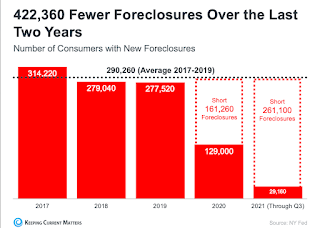
4. There Have Been Far Fewer Foreclosures Over the Last Two Years

One of the seldom-reported benefits of the forbearance program was that it allowed households experiencing financial difficulties prior to the pandemic to enter the program. It gave those homeowners an extra two years to get their finances in order and work out a plan with their lender. That prevented over 400,000 foreclosures that normally would have come to the market had the new forbearance program not been available. Otherwise, the real estate market would have had to absorb those foreclosures. Here’s a graph depicting this data:


5. The Current Market Can Easily Absorb Over a Million New Listings

When foreclosures hit the market in 2008, they added to the oversupply of houses that were already for sale. That resulted in over a nine-month supply of listings, and anything over a six-month supply can cause prices to depreciate.

It’s exactly the opposite today. The latest Existing Home Sales Report from the National Association of Realtors (NAR) reveals:

“Total housing inventory at the end of November amounted to 1.11 million units, down 9.8% from October and down 13.3% from one year ago (1.28 million). Unsold inventory sits at a 2.1-month supply at the current sales pace, a decline from both the prior month and from one year ago.”

A balanced market would have approximately a six-month supply of inventory. At 2.1 months, the market is severely understocked. Even if one million homes enter the market, there still won’t be enough inventory to meet the current demand.

Bottom Line

The end of the forbearance plan will not cause any upheaval in the housing market. Sharga puts it best:

“The fact that foreclosure starts declined despite hundreds of thousands of borrowers exiting the CARES Act mortgage forbearance program over the last few months is very encouraging. It suggests that the ‘forbearance equals foreclosure’ narrative was incorrect. . . .”

If you are looking to buy or sell rural property, please feel free to contact the Rural KC Team.  Rural property is all we handle.  913-837-0760 or 913-837-0411.   


Tuesday, January 18, 2022

CURB APPEAL FOR YOUR COUNTRY HOME


Everyone knows that curb appeal is very important if you are trying to sell your property.  There are numerous articles on the internet that will give you tips and pointers for curb appeal pertaining to city homes.  However, it is very hard to find tips on curb appeal for the country or rural property.  But no worries, the Rural KC Team is here to help.  

Make Your Porch Stand Out

One way to increase your curb appeal is to find ways to make your porch stand out and really draw the attention of visitors. There are several ways to accomplish this, with one of the most basic being a good use of color.  Now, I've noticed that a few of the rural property owners around here have accomplished this by putting a sofa or easy chair on their porch.  The furniture is usually put there until they can get enough pieces for an epic bon fire next Saturday night, but ole' Jake, the three-legged dog-he only has three legs because he got hung up in your coyote trap-has decided that that easy chair suits him just fine.  Add some red to your front door, either by painting the entire door or by adding red trim or decorations, as red really draws the eyes and puts a visitor’s focus on the entry to your home.  Word of warning here; the deer blood that came off your hands and coveralls when you tried to open the front door after processing your kill does not count.  Tasteful, colorful statues or other decorations on the porch will also help to draw the eyes and make your home stand out from the rest as well.  A "go to" for country homes are windchimes.  Bonus points if you use more that one make of beer cans (Natti Light, Coors, Bud Light, you get the picture) Adding a colorful wreath during the holiday season is always a winner.  My Aunt Doris had the best Christmas wreath that was made from snapping turtle shells painted green and red.  This decorative piece certainly made a big impact, and the turtle stew was pretty good too!

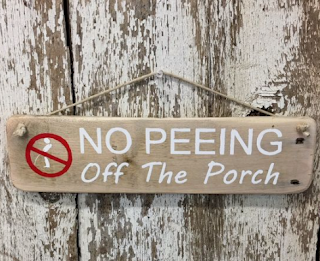
Replacing your old worn house number (or adding a house number if you previously didn’t have one on your home itself) can also make a big impact. However, in the country,  RR#2, Box #87 is just too much for your front porch.  So we suggest foregoing that tip and replacing it with a good old fashioned home made (or craft show bought) sign.  


Good Use of Decorations

There are multiple holidays that come during the winter months, but we are going to skip this section because we know that most of you still have your Christmas lights up from five years ago.  It's all good.  You do you!  

If you do feel like decorating for various holidays, there are still options available to you.  Have you ever noticed how colorful chickens are?  Oh my.  What a difference a couple of Silkies or Frizzles would make roosting on the back of that plaid couch!  You will have great visual appeal with the contrast of the chickens and Jake the three-legged blue tick hound.  Your house will be the envy of the county.  

We hope you have enjoyed this satirical blog post!  We had fun writing it.  I mean, you can't be serious all of the time-that would certainly make for a dull life. 

The Rural KC Team doesn't just specialize in buying and selling country properties-we also live the lifestyle ourselves.  Our team has been leading people to their dream country property for a couple of decades now, so we know the exact questions to ask and routes to take to make your experience as stress-free and successful as possible.  At the end of the day, there will be no surprise or roadblacks-just the promise of a peaceful country lifestyle waiting for you.

Feel free to contact us with any questions you might have.  We are here to help you!  You can also go to our website www.ruralkc.com and check out our podcast at http://ruralkc.libsyn.com/website. You can also call or text at Bill-913-837-0760 or Danicia at 913-837-0411.  Have a great day!

Tuesday, January 11, 2022

WHY WINTERIZE?


It’s around this time of year that you usually start hearing a lot about “winterization” and preparing your home for the cold months ahead. You may be wondering whether winterization really helps you get your home ready for the winter months. You might also wonder when the right time to start winterizing actually is. If you find yourself asking these questions, the answers are pretty simple. Not only should you winterize your home, but you should winterize it well before the cold weather starts moving in.

Winterizing your home can be a big job, so it’s important to understand how different winterization tasks will benefit you. The more you understand winterization as a whole, the better you’ll be at figuring out which specific winterization tasks will provide the most benefit for your home and circumstances. While it’s a large topic to cover all at once, here is some basic information to cover the whens, whys, and hows of winterizing your home.

When to Winterize

Winterization should start once the temperature starts to fall and nights start getting a lot cooler. In many areas, this is late October and early November but depending on where you live you might want to start winterizing even earlier than that. Some people think that the timing is just so that cold weather doesn’t take you by surprise, but the actual reason is a bit more practical than that.

Winterization involves a number of home maintenance and repair activities, and some of these involve adhesives, sealants, and other materials that have to cure or dry. The colder it is, the longer it takes for these materials to be set up properly. In some cases, they might even experience shrinkage or fail to set up at all if the temperature is too cold for too long. Starting winterization early enough in the fall ensures that you have enough time to get everything done before temperatures drop into the trouble zone.

How to Winterize Your Home

Winterization can be broken down into three general types of activities. These general groups are inspection, repair, and prevention. The specifics of these activities will depend on where you live and how your home is laid out, but here are the basics:

  • Inspection activities involve checking to see how barriers and equipment are holding up to make sure that they’re ready for winter. Examples include checking your roof for signs of damage, checking for drafts or other signs of window leaks or damage, and having your furnace or heat pump inspected to ensure that it’s clean and working properly.
  • Repair activities involve fixing damage and checking items off your to-do list to prevent things like drafts or unwanted animals or insects from getting into your home. Examples include fixing your siding, replacing damaged shingles, or getting repairs done to your HVAC system.
  • Prevention activities are tasks that help you to preemptively take action so that potential winter problems never come to pass. Examples include covering pipes with insulation to prevent freezing, taking window unit air conditioners out of your windows to prevent heat loss, installing thermal film over your window interiors, and disconnecting hoses from outdoor faucets before installing faucet covers to prevent leaks and freezing.

It can be a big job to cover all your winterization tasks, but each one that you complete can help you to avoid problems and even save some money over the course of the winter. Many winterization tasks are common DIY activities, though some will require a bit of professional help to complete.

Professional Winterization

It’s increasingly common for homeowners to bring in professionals to help with some or all of their winterization activities. This includes things like professional roof or HVAC inspections, calling a plumber to inspect the pipes under the house and make sure that they’re insulated, and installers to replace old drafty windows with new ones.

As always, if you are in the market to buy or sell rural real estate, give the Rural KC Team a call at 913-837-0760 or 913-837-0411.  We can help!  Have a great day.

Monday, January 3, 2022

IS IT TIME FOR NEW CABINETS?


Cabinets play an important part in the functionality of your kitchen. Unfortunately, over time you might find that your cabinets no longer really meet your needs. This could be because they’re falling into disrepair, or it may be a result of you gradually needing more storage than your cabinets can provide. You might even realize that the decoration of your kitchen and surrounding rooms just don’t match your cabinets anymore. Regardless of the reason, it could be time to consider some new cabinets.

Have you actually reached the point where you need to get new cabinets, though? If you aren’t sure, spend a little time considering how well your cabinets truly meet your needs and what it is that you ideally want. Here are a few things to think about to help you make this decision.

Cabinet Condition and Function

One of the biggest considerations when it comes to deciding if it’s time for new cabinets is how well your current cabinets really fit your current life. Your biggest things to think about here are whether the condition of the cabinets is causing you problems, and how well the cabinets actually work for what you need them for. Start with the condition, looking for any damaged areas, doors that won’t close, warped shelves, and other physical problems that you encounter when using the cabinets. If these leave you unable to use some of your space or otherwise cause problems, it may be time to do something about it.

Likewise, if you have certain items that you can’t put in your cabinets because they won’t fit, or if there are parts of the cabinets that you can’t really use due to layout reasons, then you may have an issue with the functionality of your cabinets. Sometimes this isn’t a significant enough problem to replace your cabinets, of course. If using the cabinets is inconvenient or if you have a lot of wasted space, though, something clearly needs to be done.

Cabinet Aesthetics

Even though it’s not as pressing of an issue as damaged cabinets or cabinets that you can’t use fully, having cabinets that don’t match your other furnishings can also be an issue if you’re trying to tie your design choices together. Stop and think about how well your existing cabinets go with everything else, and even whether they are visually appealing in and of themselves. Your home is an investment, and if your cabinets are taking away from your enjoyment of that investment, then it might be time to replace them.

Replacing your cabinets for aesthetic reasons can be a standalone job, or it could be something that you do as part of a larger remodeling project. If you’re only replacing the cabinets, take the time to find a new cabinet option that fits in well with your kitchen layout and the dominant design elements within the kitchen. If you’re doing a larger kitchen remodel and have decided to get rid of your ugly cabinets as a part of it, stop and think about what you want in cabinets and then use that to inform some of your other remodeling decisions.

Do You Need New Cabinets?

Whether or not you need new cabinets is a big decision, but once you’ve weighed your options you should have something of an idea of whether your current cabinets will last you a bit longer. If you do find that you need new cabinets, then finding the right cabinet maker and installer is the next step in your cabinet journey. 

As always, if you are in the market to buy or sell rural property, give the Rural KC Team-Keller Williams Partners, Inc. a call at 913-837-0760 or 913-837-0411.  Have a great day!

Monday, December 27, 2021

FIVE ESSENTIAL TIPS FOR FIRST-TIME LAND BUYERS

Whether you are purchasing it for your own enjoyment or as an investment opportunity, buying land can be a great decision - and, potentially, an overwhelming one too.  There's a lot to consider when it comes to picking out the perfect property, and experience in the housing market doesn't always directly translate into land real estate, which has its own set of rules, trends, and best practices.

Of course, you should never let a big of unknown scare you off from making what could end up being a truly fantastic investment.  And to help guide the way, we are sharing our top tips for what all first-time land buyers should know, including how to tell if a piece of land is worth your money, and how to tell when it's not.

TIP #1-ALWAYS WORK WITH A REAL ESTATE AGENT

You don't technically need a real estate agent in order to purchase land, but it is definitely recommended, especially for first-time buyers.  Nobody knows the local land market better than an experienced agent who's been helping buyers and sellers navigate it for years.  A real estate agent is also crucial when it comes to negotiating your best price, and some sellers might only want to work with potential buyers who have an agent by their side.

TIP #2-KNOW WHAT YOU HAVE TO SPEND

Land loans operate a bit differently than mortgage loans, and they are considered to be a bit riskier too.  With that in mind, you will want to be sure to figure out your financing prior to starting your search, including how much you will be able to borrow and how much cash you are going to have to invest.  Both of these are key to knowing what your total budget is so that you can optimize your search and stick to properties that make the most sense for you.

TIP #3-KNOW YOUR MUST-HAVES AND YOUR MUST-HAVE-NOTS

What is an absolute essential for you when you think about the land you want to buy?  Alternatively, what might be a dealbreaker?  Determining these factors early on will save you a lot of time in the long run, and it will also help your agent pick out the best properties for you to see.

Keep in mind that this may require a bit of research, since as a first-time buyer there may be some things you don't know yet about what features the type of land you are interested in needs to include.

TIP #4-CHECK OUT ZONING AND BUILDING REGULATIONS

A raw piece of land presents a ton of opportunities - but they are not endless.  There are almost always going to be some limitations on what you can do and build on a piece of land based on local zoning and building regulations.  Ad if you don't check into these before putting down an offer, you may end up committing to a property that doesn't actually suit your needs.

To get the details, contact the Building and Planning Department that oversees the property.  They will be able to fill you in on any and all restrictions you need to be aware of. 

TIP #5-TAKE YOUR TIME

Buying land is a big investment, so don't rush it.  The land market often moves at a bit of a slower pace than the housing market, so you should have the flexibility to really take your time and make a decision that is right for you, your finances, and your future.

There is a lot to consider when purchasing land.  Let the Rural KC Team's expertise in rural property work to your advantage.  We will take all of the guesswork out of your land purchase, making it an enjoyable transaction.  Give us a call at 913-837-0760 or 913-837-0411 or go to our website: ruralkc.com.  

Wednesday, December 22, 2021

SHINING A LIGHT ON LED UPGRADES


In these, the darkest days of the year, there’s nothing more important than adequate lighting. Unfortunately, firing up those incandescent bulbs costs money, and the more hours they run, the more they cost. Although change can be hard, today’s LED bulbs are better than ever, mimicking traditional bulbs in almost every way but with significant benefits to homeowners who make the switch.

LEDs Are Much Safer in Homes

Incandescent bulbs get hot. Sometimes they get very hot, especially when in enclosures like ceiling can fixtures. There are endless stories about recessed lighting catching fire because the wrong wattage bulb was put in by a homeowner in an attempt to brighten their space a little. That 100-watt incandescent bulb generates significantly more heat than a 40-watt or even 60-watt bulb.

LED bulbs, on the other hand, barely generate any heat at all no matter how bright they are or what color they put out. There’s almost no risk of fire due to overheating, making them super safe to leave running without supervision, even in a can light. Even better, LED recessed lighting kits are now available that replace the old can light housings, further reducing risk with upgraded construction.

LEDs Offer Additional Features

Incandescent bulbs are really good at making light, but they’re kind of a one-trick pony. LED lights, on the other hand, are super versatile. They can have built-in speakers for music on-demand in rooms like bathrooms or on covered patios where it may be awkward to keep a stereo or smart speaker. They can also be smart themselves, allowing you to change the color of the bulb based on your needs. If you’re in the mood for a blue light in your kitchen, well, just a few clicks on your phone and it’s done. If you’d rather stick to whites, but like to flip between blue hue light and yellow hue light as the day progresses, you can do that, too. You can even turn a smart bulb on and off without installing a smart switch.

Energy Consumption: Plain LEDs Versus Incandescent Bulbs

The other thing that LED bulbs do is to save money and energy and in a huge way. It might not seem like much, but running a 60-watt incandescent light bulb five hours a day adds up to about $11 a year in energy expenses – if your house has 30 light bulbs, that’s $330 a year! That incandescent bulb is rated for about a 1,000-hour lifespan, so if you only use them five hours a day, you’ll be replacing them every six months, on top of the $330 extra you’ll spend on energy. For people who work from home and may have lighting on all day, 16 hours a day, the cost of running a single incandescent bulb shoots up to $35 yearly, with a bulb change every couple of months. The electricity cost alone for those 30 bulbs is over $1,000!

LEDs, on the other hand, cost only a fraction of an incandescent bulb to run and last a whole lot longer. At five hours a day, a 10-watt LED bulb (equivalent to a 60-watt incandescent) will cost you $1.83 a year to run, and last five and a half YEARS. Even with 16 hours a day of use, that 10-watt LED is still only $5.84 to run; 30 of them will cost $175 yearly. And they’ll still last most of two years (1.71 years, to be exact).

As always, if you are in the market to buy or sell rural real estate, give the Rural KC Team-Keller Williams Partners, Inc., a call at 913-837-0760 or 913-837-0411.  Have a great day!


Tuesday, December 14, 2021

SIMPLE TRICKS TO ORGANIZE YOUR GARAGE


A thoughtful approach to garage storage makes the most of this valuable space and keeps every necessity at your fingertips.

If your house is bursting at the seams, or simply short on storage options, the solution may be as close as your garage. To make the best use of this space, however, you first need to corral its current chaos.

This is, fortunately, a relatively simple task if you incorporate a few good storage ideas. With careful planning and a little effort, you can transform your garage from a messy catchall to an efficient, well-organized household annex.


Divide and conquer

First things first: Get rid of anything you no longer use. After you’ve winnowed down the contents of your garage, sort everything into groups. Keep garden tools with garden tools, and sports equipment with sports equipment. Items used together ought to be stored together.

Where possible, place like items into clear plastic containers with lids. It’s fine to use opaque bins, just be sure to label each one. Stackable containers are especially handy. They keep your belongings clean, protect against insects and rodents, increase the amount of usable floor space, and cut down on visual clutter.


What goes where?

The efficient use of space partly depends on positioning stored items in a thoughtful, strategic way. Are there certain items you’re likely to need on a regular basis, such as cleaning supplies? If so, store them near the door so you can access them quickly and easily. Stash rarely used or seasonal items, like sleds and skis, in harder-to-reach spots.

Off the wall

The key to garage storage and organization is getting things off the floor. Capitalizing on wall space enables you to fit the most into your garage, while keeping it all visible and easy to access. The type of wall storage you choose depends on your storage needs, project budget and personal preferences. Many homeowners opt for one or a combination of the following storage standbys:

  • Pegboard. A favorite for generations, pegboard is inexpensive and easy to install. Because it can be outfitted with an array of compatible hooks, clamps, bins and shelves, pegboard can be used to store and organize just about anything, as long as the item to be stored isn’t especially heavy.
  • Open shelving. Whether a wall-mounted track system or a set of stand-alone units, open shelves are affordable, versatile and user-friendly, and they keep everything in plain sight. Plus, depending on their construction, 12- or 16-inch-deep shelves are typically capable of holding heavier items.
  • Closed cabinetry. If you plan to park your car in the garage, cabinets with doors may be the most desirable option, because closed storage means not having to come face-to-face with paint cans and garbage bags every time you leave or arrive home. Cabinets are available in countless materials and styles, but generally speaking, they are more expensive than other solutions. And because they are unable to accommodate very large items, cabinets are most effective when used in conjunction with another storage system.
  • Panelized systems. Here, entire walls are covered with specially designed panels that hold any number of companion add-ons, such as hooks and shelves. Unlike pegboard, panelized systems can handle heavier items. But that strength and utility comes at a cost, especially since some proprietary products must be installed by licensed professionals.

Look up

For certain infrequently used belongings, the ceiling provides ideal, out-of-the-way storage space. Ladders and seasonal gear can be kept here, hung by clips or straps fastened to the ceiling joists. Or you can take advantage of hoist pulley systems, which cleverly operate like the cords on window blinds. Bear in mind, however, that ceiling storage must be oriented so that it doesn’t interfere with the operation of the garage door.

Safety steps

As you’re organizing your garage, it’s important to keep safety in mind. It’s unsafe to store gasoline and propane in the garage; a single spark could lead to tragedy.

Likewise, if you have children or pets, you should store hazardous materials like fertilizer and pesticides far out of reach. Locked cabinets are a good solution for these toxic materials, and they’re also a smart place to store power tools and sharp implements.

As always, if you have any questions, or have an interest in buying or selling rural real estate, please give The Rural KC Team-Keller Williams Partners, Inc. a call at 913-837-0760 or 913-837-0411.  Have a great day!

Tuesday, December 7, 2021

CREATE THE ILLUSION OF INDOOR SPACE


Having space within the home is important to most homeowners. If everything is too small and cluttered, it can make an otherwise charming home seem claustrophobic and unpleasant. With that said, adding space to your home can be a significant ordeal that comes with a lot of costs; at the very least, adding space means a major remodeling project even if you don’t have to make major modifications like taking out a wall.

It’s often possible to create the illusion of space without actually making modifications to the home, though. The available options will depend on the layout of your house and a few other factors, of course. If you want to make your home seem a lot more open without making major changes or sinking a lot of money into remodeling, here are a few ideas to get you started.

Keep It Light

One easy way to make your rooms seem larger and create an illusion of indoor space is to lighten things up. Dark walls absorb light and make your room seem darker overall, which in turn creates the appearance that the room is smaller than it actually is. If you paint your walls and even the ceiling in lighter shades such as white, yellow, and light browns, then this will lighten up the whole room and make it seem a bit bigger overall.

Adding to this concept, eliminating a lot of the shadows in your room will also make things seem brighter and create your illusion of space. This includes large and dark shadows, obviously, but also smaller shadows such as those cast by popcorn ceilings and small tiles. That doesn’t mean everything has to be flat and covered in light to be effective, of course; large segments, shallow impressions, and similar concepts will allow you to add some contour and shadow to your rooms without ruining this effect.

Low and Open

Another great way to create an illusion of space in your rooms is to keep everything relatively low and unobtrusive in the center of your room. This gives the room a much more open look, letting the space flow freely and making it look like there’s more space than there actually is. This can be accomplished with furniture that lacks high peaks or complex designs that draw the eyes; keep everything attractive but favor minimalist designs over extreme complexity.

Of course, if everything’s at the same level then things are going to get boring pretty quickly. To combat this, put a few decorations on or near the walls so that they can draw the eyes of visitors. Not only does this make a room more appealing, but if someone’s line of sight is drawn to something on the far side of the room then it will help to create that illusion of space that you’re trying to achieve. The brain will register the items of interest as being farther than everything else, making it perceive additional distance even if your decorations or standing lamps are relatively close behind your furniture.

Watch the Clutter

Clutter is the enemy of space. Even large rooms can seem small if you’ve got something scattered everywhere. If you’re trying to maximize the amount of space that a room appears to have, avoid over-decorating and keep clutter on your surfaces and walls to a minimum. This is especially important when it comes to plants and similar items, as it’s easy to overdo it, and those plants are just going to get bigger as time goes by.

As always, if you have any questions or are in the market to either buy or sell rural property, give the Rural KC Team a call.  We would love to help.  913-837-0760 or 913-837-0411.  Have a great day.